Tag Business

Thai Work Permit

Thai Work Permit

A Thai work permit is a fundamental legal requirement for foreigners who wish to work in Thailand. Whether employed by a Thai company, managing a business, or providing professional services, foreign nationals must obtain proper authorization before engaging in any form of work. Thailand maintains strict labor and immigration regulations, and working without a valid permit can result in serious penalties, including fines, deportation, and blacklisting.

Thailand remains an attractive destination for expatriates due to its growing economy, strategic location in Southeast Asia, and opportunities in sectors such as technology, education, tourism, manufacturing, and international business. However, the legal framework governing foreign employment is detailed and compliance-driven. Both employees and employers must meet specific requirements relating to company structure, capital, tax registration, and labor ratios.

Unlike some countries where a visa alone authorizes employment, Thailand separates immigration status from work authorization. A foreigner must first obtain the appropriate visa—usually a Non-Immigrant “B” (Business) visa—before applying for a work permit. The work permit itself is issued by the Ministry of Labour and strictly defines the scope of permitted activities.

This article provides a comprehensive overview of Thai work permits, including legal definitions, eligibility requirements, application procedures, employer obligations, restricted occupations, and common compliance risks.


What Is a Thai Work Permit?

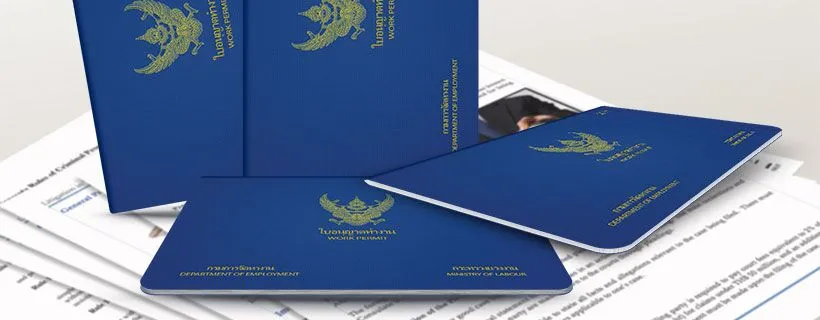
A work permit in Thailand is an official document issued by the Ministry of Labour that allows a foreigner to work legally in the country. It specifies:

  • the employer’s name
  • the job position
  • the workplace location
  • the scope of permitted duties

A foreigner is only allowed to perform the specific job described in the work permit. Any change in employer, job role, or work location requires an amendment or a new permit.

Under Thai law, “work” is broadly defined. It includes not only formal employment but also any activity involving physical or mental effort, regardless of whether compensation is received.


Legal Framework Governing Work Permits

Work permits in Thailand are governed by:

  • Alien Employment Act (B.E. 2551, amended)
  • Immigration Act
  • Ministry of Labour regulations
  • Foreign Business Act (in certain employment contexts)

These laws regulate:

  • who may work in Thailand
  • the types of jobs foreigners can perform
  • employer obligations
  • penalties for non-compliance

Who Needs a Work Permit?

Any foreign national engaging in work activities in Thailand must obtain a work permit.

Examples include:

  • full-time employees
  • company directors actively managing a business
  • consultants or advisors performing services
  • teachers and instructors
  • freelancers working under Thai contracts

Even unpaid work or volunteer activities may require a permit if they involve structured responsibilities.


Visa Requirement Before Applying

Before applying for a work permit, a foreigner must obtain a valid visa.

Common Visa Types

  • Non-Immigrant “B” (Business Visa)
  • Non-Immigrant “O” (in limited cases, such as marriage to a Thai national)

A tourist visa does not allow work permit issuance.


Employer Requirements for Hiring Foreigners

Employers must meet specific criteria to sponsor a foreign worker.

Key Requirements

  • registered Thai company
  • minimum registered capital (typically 2 million THB per foreign employee)
  • proper tax registration
  • VAT registration (if applicable)
  • financial statements showing business activity

Thai-to-Foreigner Ratio

In many cases, companies must employ at least:

  • 4 Thai employees per 1 foreign employee

This ratio may vary depending on business type and special privileges.


BOI and Special Cases

Companies promoted by the Thailand Board of Investment (BOI) may receive exemptions or relaxed requirements, such as:

  • reduced capital requirements
  • flexible employee ratios
  • faster processing

Work Permit Application Process


Step 1: Company Preparation

The employer prepares required documents, including:

  • company registration certificate
  • list of shareholders
  • financial statements
  • office lease agreement
  • tax filings

Step 2: Employee Documentation

The foreign applicant must provide:

  • passport and visa
  • educational qualifications
  • resume or work experience
  • medical certificate
  • photographs

Step 3: Submission to Ministry of Labour

The application is submitted to the Department of Employment.

Authorities review:

  • company eligibility
  • job necessity for a foreigner
  • compliance with labor regulations

Step 4: Approval and Issuance

If approved, the work permit is issued as a physical document (or digital record in newer systems).

The foreigner must:

  • sign the permit
  • carry it when working
  • comply with its conditions

Processing Time

Processing may take:

  • several days to a few weeks, depending on complexity

Validity and Renewal

Work permits are typically valid for:

  • up to 1 year (aligned with visa validity)

Renewal requires:

  • updated company documents
  • proof of ongoing employment
  • tax compliance

Restricted Occupations for Foreigners

Thailand prohibits foreigners from engaging in certain occupations reserved for Thai nationals.

Examples of Restricted Jobs

  • manual labor
  • retail trade (small-scale)
  • agriculture and farming
  • traditional crafts
  • hairdressing and beauty services
  • driving (in many cases)

These restrictions aim to protect local employment.


Employer and Employee Obligations


Employee Responsibilities

  • work only within the permitted role
  • carry the work permit while working
  • report address changes
  • comply with visa conditions

Employer Responsibilities

  • ensure legal employment conditions
  • maintain proper tax and payroll records
  • report termination of employment
  • notify authorities of changes

Changing Jobs or Employers

A work permit is tied to a specific employer.

If a foreigner changes jobs:

  • the existing permit must be canceled
  • a new permit must be issued

Working for a new employer without updating the permit is illegal.


Penalties for Non-Compliance

Thailand enforces strict penalties for violations.

For Foreign Workers

  • fines
  • deportation
  • blacklisting from re-entry

For Employers

  • fines
  • business penalties
  • legal liability

Even minor violations can lead to serious consequences.


Digital Work Permit Developments

Thailand has introduced digital systems to streamline work permit processing.

These systems aim to:

  • reduce paperwork
  • improve efficiency
  • allow online tracking

However, compliance requirements remain strict.


Common Challenges for Foreign Workers

Foreigners often encounter issues such as:

  • incomplete documentation
  • misunderstanding visa requirements
  • employer non-compliance
  • delays in processing
  • restrictions on job roles
  • language barriers

Proper preparation helps avoid these problems.


Practical Tips for Obtaining a Work Permit

To improve success:

  • secure the correct visa before applying
  • ensure employer meets legal requirements
  • prepare complete and accurate documents
  • verify job description aligns with qualifications
  • consult legal or visa specialists if needed

Conclusion

A Thai work permit is an essential legal requirement for any foreigner seeking to work in Thailand. It defines the scope of employment and ensures compliance with Thailand’s labor and immigration laws. The process involves coordination between the employee and employer, requiring proper documentation, company eligibility, and adherence to strict regulatory standards.

While Thailand offers significant opportunities for foreign professionals and investors, the legal framework is precise and must be followed carefully. Understanding visa requirements, employer obligations, restricted occupations, and compliance rules is critical to avoiding penalties and ensuring a smooth working experience.

With proper planning and adherence to legal procedures, obtaining a Thai work permit can be a straightforward process, allowing foreigners to work legally and contribute to Thailand’s dynamic economy.
Thailand Income Tax

Thailand Income Tax

Thailand income tax system affects residents, non-residents, employees, business owners, and foreign nationals earning or remitting income into the country. While the framework appears straightforward at first glance, practical outcomes depend heavily on tax residency, income source, timing of remittance, and the nature of the income earned. This article provides a detailed explanation of Thailand’s income tax regime, how liability is determined, applicable rates, filing obligations, and key compliance considerations for individuals.

1. The legal framework and tax authority

Thailand’s income tax is governed primarily by the Revenue Code, administered by the Revenue Department under the Ministry of Finance. The Revenue Code defines taxable income categories, residency rules, allowable deductions, filing deadlines, penalties, and enforcement mechanisms.

Income tax in Thailand is assessed on a calendar-year basis (January 1 to December 31), with filing generally due in the following year. The system applies to both Thai nationals and foreigners, but tax treatment differs significantly depending on residency status and income source.

2. Tax residency: the foundation of liability

The most critical concept in Thai income taxation is tax residency.

An individual is considered a Thai tax resident if they reside in Thailand for 180 days or more in a calendar year, regardless of visa type. This is a physical-presence test, not a domicile or nationality test.

  • Tax residents are subject to Thai personal income tax on:

    • Thai-sourced income; and

    • Certain foreign-sourced income, depending on remittance rules.

  • Non-residents are taxed only on Thai-sourced income, usually at flat withholding rates.

Residency is assessed annually, meaning a person may be a resident one year and a non-resident the next, depending on time spent in Thailand.

3. Thai-sourced vs foreign-sourced income

Determining the source of income is as important as determining residency.

Thai-sourced income generally includes:

  • Employment income for work performed in Thailand

  • Business income generated from activities conducted in Thailand

  • Rental income from property located in Thailand

  • Capital gains from the sale of Thai immovable property

  • Income paid by a Thai company for services rendered in Thailand

Foreign-sourced income generally includes:

  • Salary for work performed entirely outside Thailand

  • Dividends from foreign companies

  • Interest from foreign bank accounts

  • Overseas business profits

For non-residents, foreign-sourced income is not taxable in Thailand.

For residents, foreign-sourced income may become taxable if remitted into Thailand, depending on the tax year and current Revenue Department interpretations.

4. Remittance rules and recent developments

Historically, Thailand applied a remittance-based approach: foreign income earned in one year and remitted into Thailand in a later year was not taxable. However, administrative interpretations have evolved.

Under current guidance, foreign-sourced income remitted into Thailand by a tax resident may be subject to Thai tax, regardless of the year it was earned. This has major implications for retirees, digital professionals, and investors who maintain offshore income streams.

Key practical takeaway:

  • The timing, purpose, and documentation of remittances matter.

  • Transfers for living expenses, investments, or asset purchases may all be scrutinized.

  • Proper tax planning and professional advice are increasingly important.

5. Categories of taxable income

Thai personal income tax divides income into several statutory categories, including:

  1. Employment income (salary, wages, bonuses, benefits)

  2. Income from professional services

  3. Business and commercial income

  4. Interest, dividends, and investment income

  5. Rental income

  6. Capital gains (treated as ordinary income in many cases)

  7. Other income not classified elsewhere

Each category has specific deduction rules and allowable expense treatments, which affect net taxable income.

6. Progressive tax rates for individuals

Thailand applies progressive income tax rates to residents, meaning higher income is taxed at higher marginal rates.

As of current law, individual tax rates range from 0% to 35%, applied in bands. The first portion of income is taxed at low or zero rates, with higher brackets applying only to income above each threshold.

Non-residents are generally taxed at flat withholding rates, commonly around 15%, though this varies by income type and applicable tax treaties.

7. Deductions, allowances, and tax relief

Thailand provides a range of standard deductions and personal allowances, which can significantly reduce taxable income for residents.

Common allowances include:

  • Personal allowance

  • Spouse allowance (if certain conditions are met)

  • Child allowances

  • Insurance premium deductions

  • Retirement fund contributions

  • Social security contributions

  • Approved donations

Certain income categories also allow standard expense deductions (for example, a percentage of employment income), even without itemized proof.

Understanding and properly applying these deductions is essential for accurate tax calculation and compliance.

8. Withholding tax and employer obligations

Thailand relies heavily on a withholding tax system. Employers and payers are required to withhold tax at source and remit it to the Revenue Department.

Examples include:

  • Employers withholding monthly income tax from salaries

  • Companies withholding tax on service fees paid to individuals

  • Banks withholding tax on interest income

Withheld tax is credited against the individual’s annual tax liability. If withholding exceeds the final tax due, the taxpayer may claim a refund.

9. Filing obligations and deadlines

Tax residents must file an annual personal income tax return (PND 90 or PND 91) by March 31 of the following year (extensions may apply for electronic filing).

In some cases, mid-year filings are required for certain types of income (such as business income), with payments due by September.

Failure to file or underpayment of tax can result in:

  • Surcharges

  • Monthly interest penalties

  • Administrative fines

  • Potential criminal liability for serious non-compliance

10. Double taxation agreements (DTAs)

Thailand has an extensive network of double taxation agreements with many countries. DTAs help prevent the same income from being taxed twice and may:

  • Reduce withholding tax rates

  • Clarify taxing rights between countries

  • Provide relief through tax credits or exemptions

However, DTAs do not eliminate filing obligations and must be applied correctly, often requiring residency certificates and proper documentation.

11. Common risk areas and practical issues

Key areas that frequently cause problems include:

  • Assuming visa type determines tax status (it does not)

  • Misunderstanding remittance rules

  • Failing to report offshore income brought into Thailand

  • Improper classification of employment vs independent contractor income

  • Ignoring mid-year filing obligations for business income

As enforcement and data exchange increase, compliance risks are higher than in the past.

12. Conclusion

Thailand’s income tax system is built on clear statutory principles but requires careful analysis in practice. Residency status, income source, remittance timing, and documentation collectively determine tax liability.

For individuals living, working, or spending extended time in Thailand—especially foreigners with international income—understanding these rules is essential to avoid penalties and unexpected tax exposure. While the system offers deductions, allowances, and treaty protections, these benefits must be actively claimed and properly supported.

Given recent shifts in enforcement and interpretation, proactive planning and professional advice are no longer optional for many taxpayers. Proper compliance ensures not only legal certainty but also peace of mind when living or doing business in Thailand.