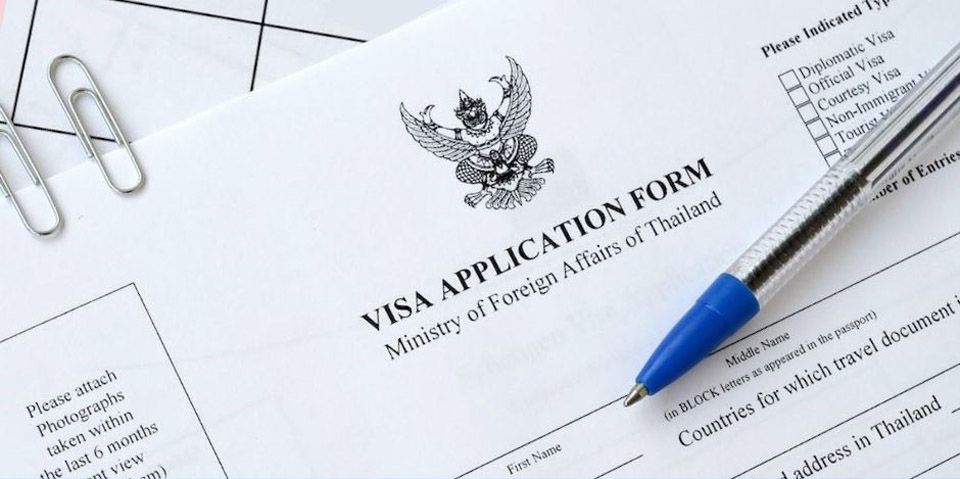
Business Visa in Thailand

Business Visa in Thailand

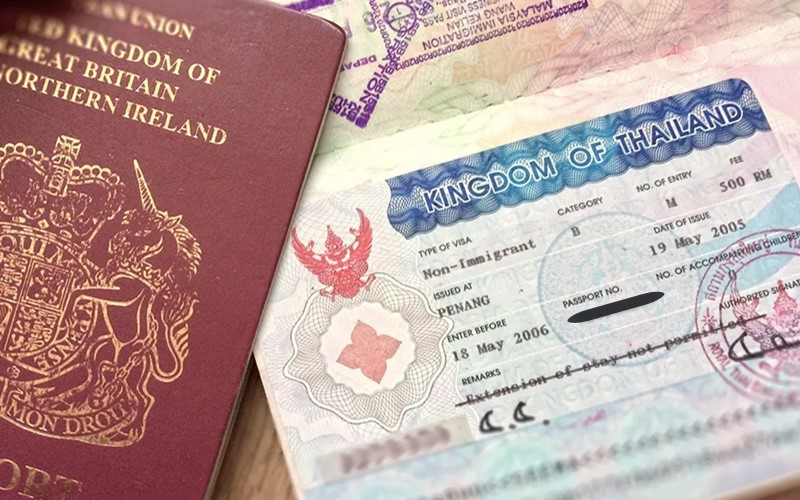
Business Visa in Thailand. Thailand’s Non-Immigrant “B” Visa, commonly known as the Business Visa, is one of the most important categories for foreigners intending to work, invest, or conduct business activities in the country. Unlike a tourist visa, it serves as the legal foundation for applying for a work permit and long-term business stay. However, the process involves several steps — from embassy applications to in-country extensions — and a precise understanding of Thai immigration and labor laws.

This comprehensive guide explains the types of Business Visas, eligibility, documentary requirements, extension procedures, work permit connections, and practical compliance duties that foreign professionals and employers must know.

1. Purpose and Legal Basis

The Business Visa is issued under Thailand’s Immigration Act B.E. 2522 (1979) and implemented through the Royal Thai Embassies and Consulates worldwide. It is designed for foreigners who:

  • Intend to work or conduct business in Thailand;

  • Wish to establish or manage a Thai company;

  • Are employed by a Thai firm or a foreign company with a branch in Thailand;

  • Need to attend business meetings, seminars, or negotiations.

Crucially, a Business Visa does not itself permit employment — it only provides the immigration status that allows a foreigner to apply for a work permit after entering Thailand.

2. Categories of the Business Visa

The Non-Immigrant “B” Visa is divided into two main types:

(a) Single-Entry Business Visa

  • Valid for 90 days from the date of entry.

  • Intended for foreigners who need to enter Thailand to work temporarily or complete short-term business tasks (e.g., project setup, negotiations).

  • Must be used within 90 days of issuance.

(b) Multiple-Entry Business Visa

  • Valid for 1 year, allowing multiple entries of up to 90 days each.

  • Suitable for businesspersons or company directors who frequently travel in and out of Thailand.

  • Requires maintaining financial stability (bank statements and corporate sponsorship are often reviewed).

Some Thai embassies also allow in-country visa extensions to convert a single-entry Non-B visa into a long-term, renewable one-year visa once a work permit is obtained.

3. Key Eligibility Requirements

To qualify for a Business Visa, an applicant must demonstrate:

  • Legitimate business purpose (employment, company investment, or management duties).

  • Sponsorship by a Thai-registered company — either as an employer or as a partner organization.

  • Company compliance — the sponsoring company must have registered capital of at least 2 million THB for each foreign employee, pay proper taxes, and maintain at least four Thai employees per foreign worker (a Ministry of Labor requirement).

  • Clean criminal record and no overstay history.

For foreign investors, proof of shareholding, corporate registration, or BOI (Board of Investment) promotion approval may also be necessary.

4. Document Requirements (Embassy Level)

Each Royal Thai Embassy may have slightly different procedures, but generally, applicants must prepare:

From the Applicant:

  • Valid passport (at least 6 months validity);

  • Completed visa application form;

  • Recent passport-size photo;

  • Proof of adequate funds (minimum 20,000 THB per person or 40,000 THB per family);

  • Employment contract or letter of appointment specifying position, salary, and duration;

  • Academic or professional credentials (if required for the occupation).

From the Thai Company:

  • Invitation letter stating the purpose of visit and confirming sponsorship;

  • Company registration documents (DBD Certificate, shareholder list, VAT registration);

  • Corporate income tax returns (PND 50) and latest financial statements;

  • Business license (if applicable);

  • Letter of guarantee for the applicant’s character and compliance.

All Thai-language documents must be stamped with the company seal and signed by the managing director.

5. The Application Process

Step 1: Submission at Thai Embassy or Consulate

Applicants must apply at a Thai diplomatic post outside Thailand or via the Thai e-Visa portal. Processing time varies from 3 to 10 business days depending on the location.

Step 2: Entering Thailand

Upon approval, the visa holder may enter Thailand and receive an initial 90-day stay. It’s vital to note the permitted period of stay stamped in the passport upon arrival.

Step 3: Applying for a Work Permit

Once in Thailand, the foreigner’s employer must apply for a work permit at the Department of Employment (Ministry of Labor). The visa must remain valid during the work permit process.

Step 4: Visa Extension (1-Year Stay)

After the work permit is issued, the foreigner can apply for a 1-year visa extension at the Immigration Bureau. The extension is renewable annually as long as employment or business activity continues.

6. Business Visa Under BOI Promotion

Foreigners investing in projects promoted by the Thailand Board of Investment (BOI) enjoy significant privileges. The BOI may issue an endorsement that allows the applicant to obtain:

  • A visa-on-arrival through the One Stop Service Center (OSSC) in Bangkok;

  • Expedited work permit issuance;

  • Multi-year visa extensions aligned with BOI project timelines.

BOI-endorsed companies bypass several standard requirements (e.g., Thai employee ratios or capital minimums), making them ideal for large-scale investors and high-skill expatriates.

7. Compliance and Reporting Duties

Business visa holders must comply with Thailand’s immigration obligations:

  • 90-Day Reporting: Every 90 days, the foreigner must report their residential address to the Immigration Bureau (online, in-person, or by mail).

  • Re-Entry Permit: If leaving Thailand before the visa’s expiry, a re-entry permit is required to keep the visa valid.

  • Work-Scope Limitation: The visa and work permit define permissible employment. Engaging in unauthorized work is a criminal offense under Thai labor law.

  • Tax Registration: Once employed, the foreigner must obtain a personal tax identification number and file annual tax returns.

Failure to comply can lead to visa cancellation, fines, or deportation.

8. Common Pitfalls and Practical Tips

  • Wrong visa type — A tourist visa cannot be converted easily into a Business Visa without leaving Thailand, except under limited Ministry of Interior discretion.

  • Incomplete company documents — Embassies frequently reject applications where company financials or DBD certificates are missing.

  • Expired passport or visa — Both the passport and visa validity must exceed the work permit duration.

  • Misunderstanding work permit linkage — Even with a valid Business Visa, work without a permit is illegal.

  • Neglecting renewals — Missing 90-day reports or renewal deadlines results in penalties or bans.

Applicants are advised to work with an immigration lawyer or licensed visa agent familiar with the specific embassy’s requirements to ensure smooth processing.

9. Timelines and Processing Overview

Stage Responsible Agency Typical Duration
Embassy application Thai Embassy / e-Visa portal 3–10 working days
Entry & 90-day permission Immigration Bureau (airport) Upon entry
Work permit issuance Department of Employment 7–15 working days
Visa extension (1 year) Immigration Bureau 1–2 weeks
90-day address reporting Immigration Bureau Every 90 days

10. Renewals, Dependents, and Change of Employer

  • Renewals: One-year extensions can be renewed indefinitely as long as employment continues and company compliance is maintained.

  • Dependents: Spouses and children may apply for Non-Immigrant “O” visas and reside in Thailand as dependents of the Business Visa holder.

  • Change of Employer: If employment changes, the foreigner must cancel the previous work permit and reapply under the new employer — failure to do so invalidates the visa.

Conclusion

A Business Visa in Thailand is more than a travel document — it is the legal foundation for professional activity, investment, and corporate growth. To succeed, both foreign applicants and Thai companies must meticulously align immigration, labor, and tax compliance.

Whether through a standard Non-Immigrant “B” route or BOI-promoted channels, the keys to a smooth process are accurate documentation, timely registration, and strict adherence to renewal obligations. For long-term investors and professionals, maintaining lawful status under a Business Visa is not only a regulatory requirement but a sign of commitment to responsible participation in Thailand’s growing economy.

Thailand Visa Exemption

Thailand Visa Exemptions

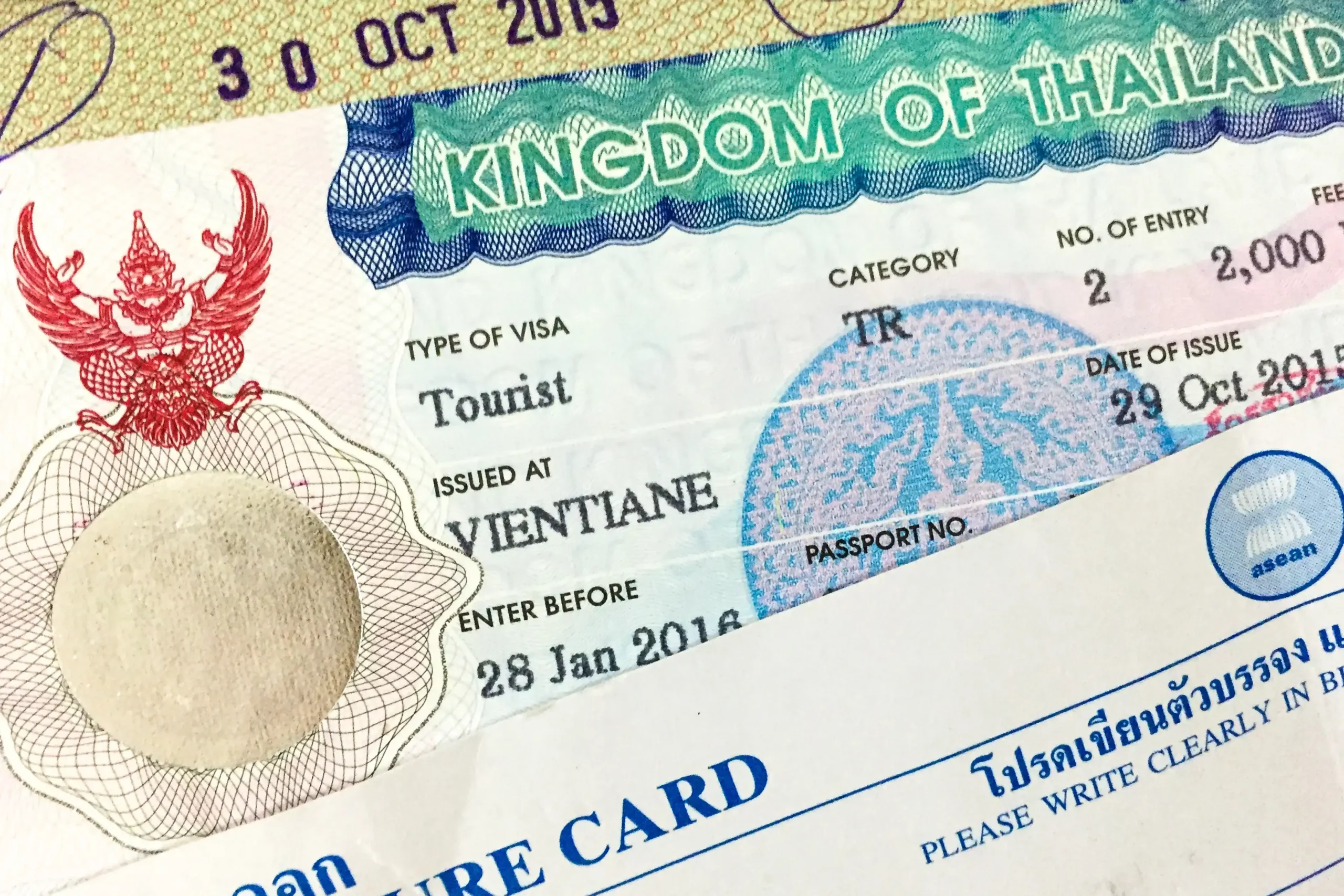
Thailand visa exemption system is now the single most-used entry route for short stays, but the rules have changed several times since 2023 and remain detail-sensitive. Below I explain the legal-practical structure (who qualifies and for how long), the border-type limits and documentary checks you will actually face at immigration, how in-country extensions work, what replaced the paper arrival card, and the real-world enforcement risks (overstays, border-runs). I cite official and high-quality practitioner sources so you can verify for a particular nationality or port of entry.

1) Big picture — what “visa exemption” actually means

Visa exemption” is not a visa; it is a unilateral permission granted by Thailand that allows holders of ordinary passports from specified countries to enter without obtaining a visa in advance for specified short purposes (generally tourism, short business engagements or urgent/adhoc work). The list and permitted length of stay are published by the Ministry of Foreign Affairs / Department of Consular Affairs and vary by nationality (some bilateral agreements give longer stays). The Ministry’s official summary (the standard government source) lists the current groups and the applicable permitted periods.

2) Who currently benefits and for how long

Since mid-2024 Thailand expanded the visa-exemption cohort to cover a large group of countries (commonly referenced as 93 jurisdictions), with many nationals eligible for 60 days on entry and a discretionary in-country extension of up to 30 days (i.e., 60 + 30 days in practice for many nationals). A smaller number of countries remain governed by bilateral agreements (some permitting 90 days) or by Visa-on-Arrival rules (shorter stays and a different checklist). Always check the Ministry’s “Summary of Countries and Territories” PDF for your nationality.

3) Border type matters — air vs land/sea and entry frequency

Two practical constraints often trip travelers:

  • Land/sea crossings are limited. Entry under the tourist-visa-exemption scheme via land or sea checkpoints is generally limited to twice per calendar year for most nationalities (there are exceptions such as Malaysia, Brunei, Indonesia and Singapore). This is an administrative rule applied at border checkpoints — it does not usually affect airport arrivals. If you plan repeated short stays using overland “visa-runs”, expect refusals once you hit the limit.

  • Air entries have no published numeric cap but immigration officers have discretion. Frequent, back-to-back air arrivals that look like de-facto residence may trigger secondary questioning or refusal — behavior, supporting documents and travel pattern matter, not just the stamp.

4) Documentary requirements at the port of entry (what officers actually check)

Immigration will typically require (and can refuse entry if missing):

  • Passport with sufficient validity (check your embassy; 6 months is normally required).

  • Onward/return ticket showing exit within the permitted stay period.

  • Proof of sufficient funds: the standard position used by Thai authorities and missions is 10,000 THB per person or 20,000 THB per family (cash, travelers’ cheques or bank evidence). Expect spot checks — first-time visitors are more likely to be asked.

  • Accommodation evidence and the right ETA/TDAC (see next section). For Visa-on-Arrival travelers the requirements (photo, form, VO A fee, and the same funds threshold) differ in detail. The official MFA/consular summary and consulate webpages list the VOA categories and checklist.

5) Digital arrival systems — the TDAC (not the old TM6)

Thailand has moved to a mandatory digital arrival system. As of 2025 the Thailand Digital Arrival Card (TDAC) is required to be completed online in advance for most arrivals (it replaced the paper TM6 and the earlier ETA plan evolved into a digital arrival card rollout). Airlines and immigration will check TDAC/online registration before boarding/entry — leave this to the last minute at your peril. Confirm the current submission window and requirement with your airline and the Thai mission in your country.

6) Extensions in Thailand — what’s allowed and how it’s done

If you entered under the visa-exemption scheme you may apply at a Thai Immigration office to extend your stay (extensions are discretionary). The routine practice is a single 30-day extension (Immigration fee commonly THB 1,900) — applied well before your permitted exit date. The extension is not automatic: present evidence (reason for extension, accommodation, funds). If you must remain longer for any reason, talk to immigration or a qualified lawyer early; overstays carry heavy consequences.

7) Enforcement risk — overstays, fines and bans

Overstaying is strictly enforced. For overstay under 90 days the usual penalty is 500 THB per day up to a statutory maximum of 20,000 THB; longer overstays can trigger automatic re-entry bans (1 year or longer), detention and deportation. Payment of the fine does not guarantee avoidance of a future ban in serious or repeat cases. If a visa problem occurs, engage immigration or specialist counsel immediately rather than relying on ad-hoc border fixes.

8) Common failure modes I see in practice (real-world examples)

  • Border-run refusal: a frequent flyer who used land border runs hit the “2 per year” land limit and was refused entry; the remedy was to apply for a proper tourist visa at a Thai consulate and present clear return tickets.

  • TDAC omission: an otherwise eligible visitor was denied boarding by an airline because they had not completed the TDAC before the flight; the fix required rebooking after completing the digital form.

  • Funds challenge: a family arriving with minimal visible funds was summoned for secondary inspection; showing bank statements and a confirmed paid booking resolved the issue but the delay cost a day of travel.

9) Practical checklist for travelers and immigration counsel

(1) Before travel: check the MFA “Summary of Countries” for your passport; confirm TDAC/ETA/VOA needs with the nearest Thai mission; have onward ticket and proof of funds. 
(2) At arrival: present passport, TDAC confirmation, onward ticket and accommodation booking; if asked, show bank statement or cash. 
(3) If you intend longer stay: either apply for the in-country extension promptly (Immigration) or obtain an appropriate visa from a Thai diplomatic post before travel.

10) Final note on verification

Thai visa policy remains administratively active and subject to political change (the MFA/Department of Consular Affairs publishes the legal lists and formal changes). For any travel plan that depends on the precise permitted stay (land borders, consecutive stays, work-related short trips), check the MFA/consulate guidance and your airline within 72–120 hours of departure. Key official references: Ministry of Foreign Affairs consular summaries, local Thai embassy/consulate pages, and the Immigration Bureau / TDAC notice.

Thai Elite Visa

Thai Elite Visa

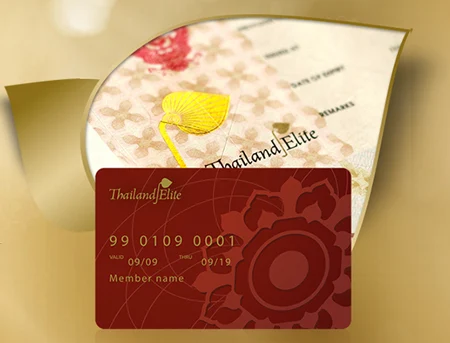
The Thai Elite Visa, officially rebranded in 2023 as the Thailand Privilege Visa, is not simply a long-stay visa—it is a government-authorized residency program founded on a contractual relationship between the applicant and the Thailand Privilege Card Co., Ltd. (TPC), a wholly state-owned enterprise. This visa operates under Section 17 of the Immigration Act B.E. 2522 (1979), which allows the Minister of Interior, with Cabinet approval, to grant foreigners residence outside normal immigration constraints.

What differentiates this visa from other residence categories is not only its legal foundation, but also the exclusive rights, administrative support, and lifestyle privileges it offers—delivered through a commercial framework rather than a humanitarian, employment, or family-based one.

II. Legal Basis and Governing Authority

A. Section 17 of the Immigration Act

This rarely invoked provision provides the legal grounds:

“In a special case, the Minister, with approval of the Cabinet, may permit any alien to stay in the Kingdom under any conditions he deems appropriate.”

Unlike typical visas that are issued under detailed regulations and quota systems (e.g., B, O, O-A, ED), the Elite Visa is issued by ministerial discretion through a standing Cabinet resolution, bypassing traditional legal restrictions.

B. Thailand Privilege Card Co., Ltd. (TPC)

  • Incorporated under Thai law as a state enterprise

  • Operates under the Tourism Authority of Thailand (TAT)

  • Its authority is based on Cabinet approval and TAT oversight, not immigration legislation alone

TPC is not a visa-issuing authority but acts as an intermediary—vetting applicants, collecting membership fees, and liaising with the Immigration Bureau, which ultimately issues the PE (Privilege Entry) Visa.

III. Membership Structure and Visa Duration

Following the program’s restructuring in October 2023, the Thailand Privilege Visa now offers four tiers:

Tier Fee (THB) Validity Privilege Points (Per Year) Transferable Family Eligible
GOLD 900,000 5 years 20 No No
PLATINUM 1.5 million 10 years 35 Yes (once) Yes
DIAMOND 2.5 million 15 years 55 Yes (once) Yes
RESERVE 5 million 20 years 120 Yes (exclusive) Yes (invite-only)

Each membership includes a five-year renewable visa, categorized as Non-Immigrant PE, with 365-day stay permissions per entry.

IV. Immigration and Bureaucratic Privileges

A. Entry and Reentry Rights

  • Multiple-entry privileges without the need for re-entry permits

  • Stay renewals processed internally in Thailand (no visa runs)

  • Visa validity up to 20 years (depending on tier)

B. Immigration Administration Support

TPC coordinates on behalf of members with the Immigration Bureau for:

  • 90-day reporting (TM.47)

  • Change of address notification (TM.30)

  • Annual visa extension processing at OSSC (Bangkok) or provincial Immigration

C. Fast-Track Services

  • Dedicated immigration fast lanes at all major Thai international airports

  • Personalized assistance upon arrival and departure

V. Administrative, Legal, and Governmental Benefits

Elite Visa members receive concierge-level support across several government functions:

Function Assistance Provided
Driver’s License Appointment booking, form assistance, document translation, transport for higher tiers
Thai Bank Account Opening Certification letters and introductions to partner banks
Taxpayer Identification (TIN) TPC assists eligible tax residents with Revenue Department registration
Document Legalization Coordination with translation and notarial services

These services do not replace legal compliance, but they simplify navigation of Thai bureaucracy—particularly for non-Thai speakers.

VI. Privilege Points and Lifestyle Services

Unlike standard immigration pathways, the Elite Visa program integrates exclusive lifestyle benefits, governed by a point redemption system:

Category Examples of Redeemable Services
Transport Airport limousine pick-up/drop-off, inter-city transfers
Healthcare Executive checkups at hospitals like Bumrungrad and Samitivej
Hospitality Five-star hotel stays, room upgrades, premium dining access
Golf & Spa Free rounds at selected golf clubs, spa and wellness treatments
Shopping & Events VIP invitations, private retail experiences, cultural event access

Points reset every year and are non-transferable. The availability of services is subject to TPC’s partner agreements and booking limits.

VII. Taxation and Financial Planning Implications

A. Tax Residency

An Elite Visa holder becomes a Thai tax resident only if physically present in Thailand 183 or more days per year. Tax residents must:

  • File an annual Personal Income Tax Return

  • Declare income remitted to Thailand during that calendar year

B. Offshore Income (Revenue Code, Section 41)

Foreign income is only taxable if remitted to Thailand in the same tax year it is earned.

  • Income kept abroad and remitted in subsequent years is not taxable

  • This allows for legal tax deferral for individuals with offshore earnings or investments

Elite Visa holders are well-positioned for residency-based tax planning, particularly retirees, digital nomads, and investors with offshore income.

VIII. Legal Restrictions and Limitations

A. Prohibition on Employment

The PE Visa does not grant work authorization under Thai law. Engaging in employment without proper documentation violates:

  • Section 37(1) of the Immigration Act

  • The Alien Working Act B.E. 2551

Violations may lead to:

  • Visa revocation

  • Fines and deportation

  • Future immigration bans

This includes volunteer work, consulting, or managing a business, even without direct compensation.

B. Land and Business Ownership

Elite members are still foreign nationals and thus subject to standard legal restrictions:

  • No land ownership permitted under the Land Code B.E. 2497

  • May own condominium units under the 49% foreign quota

  • May lease land or property for up to 30 years, with optional renewals

  • May invest in Thai companies, subject to restrictions under the Foreign Business Act

IX. Revocation and Compliance

Termination Grounds

Cause Consequence
Criminal conviction (Thailand or abroad) Immediate cancellation, blacklist under Immigration Act
Immigration violation (overstay, false reporting) Termination of visa and contract
Misrepresentation in application Nullification of visa and loss of privileges
Unauthorized work or business activity Revocation and entry ban

Membership fees are non-refundable, even in cases of termination.

X. Application Process

Eligibility

  • Minimum age: 20 years

  • Valid passport (minimum 6 months)

  • No criminal record (especially drug or immigration offenses)

  • No blacklist or overstay record in Thailand

Procedure

  1. Submit application via TPC or authorized agent

  2. Background check by Immigration Bureau and Royal Thai Police

  3. Receive conditional approval and invoice

  4. Pay full membership fee

  5. Welcome letter and member ID issued

  6. Visa issued at:

    • Thai Embassy (if applying abroad), or

    • One Stop Service Center (if in Thailand)

Processing time: Typically 30–90 days

XI. Conclusion

The Thailand Elite Visa is a legal residency instrument that bridges immigration and state-sponsored concierge services. It is unique in that it provides immigration stability, bureaucratic support, and premium lifestyle benefits under a contractual, non-quota-based model.

It is best suited for:

  • Retirees who wish to avoid income or deposit requirements

  • Remote professionals and digital nomads (with offshore income)

  • Frequent travelers who value airport and immigration convenience

  • High-net-worth individuals seeking administrative ease in Thailand

However, the visa offers no work rights, no path to permanent residency or citizenship, and no exemption from standard foreign ownership restrictions.

When used within the legal limits, it offers an exceptionally stable and low-maintenance residency solution, backed by Cabinet authority and institutional infrastructure.

Thailand Long-Term Resident Visa

Thailand Long-term Resident Visa

Thailand Long-Term Resident Visa is a distinct legal mechanism introduced through a Cabinet Resolution in 2022. Its purpose is to provide a formal, long-term immigration status for qualifying foreign nationals who align with Thailand’s strategic economic and demographic policies. The visa is not merely an extended stay permit—it functions as a quasi-residency program, built on defined statutory, fiscal, and administrative foundations.

Unlike conventional Thai visas—such as the Non-Immigrant B, O-A, or the Elite Visa—the LTR Visa is targeted, policy-oriented, and administered through inter-agency coordination, primarily involving the Board of Investment (BOI), Immigration Bureau, and the Revenue Department.

II. Legal and Administrative Framework

A. Statutory and Executive Instruments

  • Immigration Act B.E. 2522 (1979): Establishes the framework for foreign residence in Thailand.

  • Cabinet Resolution (2022): Created the LTR Visa category under the direct supervision of the BOI.

  • Ministerial and Inter-Agency Guidelines: Define implementation, tax treatment, employment rights, and verification mechanisms.

B. Administrative Coordination

Agency Function
BOI Eligibility screening, issuance of digital work permits, liaison with strategic sectors
Immigration Bureau Entry, stay, and address monitoring under the Immigration Act
Revenue Department Tax identification, exemptions, and enforcement
OSSVC Centralized processing for visa, family members, reporting, and renewals

III. Visa Term and Structure

Element Provision
Validity 10 years (issued in two 5-year terms)
Visa Type Multiple-entry
Work Permit Optional, digital, quota-exempt (categories 3 and 4)
Re-entry Permits Not required
Annual Reporting Once per year (replaces 90-day reporting obligation)
Health Coverage Required: minimum USD 50,000 or Thai Social Security enrollment

IV. LTR Visa Categories: Policy-Driven Design

The visa is limited to four categories of foreign nationals, each serving a discrete economic or social policy objective:

1. Wealthy Global Citizens

  • Income: ≥ USD 80,000/year (past 2 years).

  • Net Assets: ≥ USD 1 million.

  • Thai Investment: ≥ USD 500,000 in real estate, bonds, or equities.

Policy Objective: Capital inflow to stimulate domestic financial markets and property sectors.

2. Wealthy Pensioners

  • Age: ≥ 50 years.

  • Income: ≥ USD 80,000/year or USD 40,000/year + USD 250,000 Thai investment.

Policy Objective: Stimulate service sector and healthcare consumption through retiree presence, without burdening state welfare.

3. Work-from-Thailand Professionals

  • Employer: Foreign firm with global revenue ≥ USD 150 million.

  • Income: ≥ USD 80,000/year.

  • Experience: ≥ 5 years.

  • Work Model: 100% remote.

Policy Objective: Capture the economic footprint of globally mobile professionals while insulating local job markets.

4. Highly Skilled Professionals

  • Income: ≥ USD 80,000/year or USD 40,000 with a postgraduate degree.

  • Sector: Must be BOI-prioritized (e.g., AI, robotics, biotech).

  • Employer: BOI-approved or government-affiliated.

Policy Objective: Address skill shortages in strategic sectors aligned with the Thailand 4.0 economic model.

V. Employment Rights and Digital Work Permits

LTR holders under Categories 3 and 4 may obtain a BOI-issued digital work permit, which is exempt from Thai labor quotas and traditional regulatory constraints.

Features of Digital Work Authorization

  • Quota-Free: No requirement for 4 Thai employees per foreign worker.

  • Validity: 5 years, synchronized with the LTR Visa.

  • Issuance Authority: BOI, bypassing the Ministry of Labour.

  • Sectoral Limit: Only for employment in certified industries (for Category 4).

The work permit’s digital format removes the need for physical documentation and is integrated with the national immigration database.

VI. Taxation: Codified Incentives under Revenue Law

Thailand’s territorial tax regime, governed by the Revenue Code, is adapted to the LTR Visa through specific provisions:

1. 17% Flat Personal Income Tax

  • Eligibility: Category 4 (Highly Skilled Professionals).

  • Scope: Thai-sourced employment income.

  • Condition: Must be employed by a BOI-endorsed entity.

This replaces the standard progressive rates (5%–35%) and is administratively validated by BOI certification.

2. Exemption for Foreign-Sourced Income

Per Section 41 of the Revenue Code:

  • Income earned abroad is not taxed in Thailand if not remitted during the same tax year.

  • Applies to:

    • Remote workers.

    • Pensioners.

    • Offshore investors.

This exemption creates a fully legal framework for tax neutrality on non-Thai income.

3. Tax Filing Obligations

  • Residency Trigger: ≥183 days per calendar year.

  • Filing: Mandatory for residents, even if no Thai-source income is taxed.

VII. Property Rights and Investment Access

While Thailand prohibits freehold land ownership by foreigners under the Land Code B.E. 2497, the LTR Visa enables significant participation in the local real estate and capital markets:

Permitted

  • Condominium Ownership: Within the 49% foreign ownership quota.

  • Leasehold Property: Land and residential houses (up to 30 years, renewable).

  • Financial Investments: Government bonds, Thai equities, and BOI-sanctioned projects.

Prohibited

  • Land Ownership: Not allowed under current law; LTR status does not override this.

VIII. Family Inclusion and Dependent Privileges

LTR holders may include up to four dependents:

Dependent Type Entitlements
Legally married spouse 10-year visa; may apply for work permit independently
Children under 20 Full visa coverage; access to education in Thailand

All dependents are processed through a unified case file and administered via the OSSVC, significantly simplifying administrative burdens for families.

IX. Immigration and Travel Privileges

  • Re-entry permit exemption for international travel.

  • Fast-track processing at designated international airports.

  • Centralized services at OSSVC for renewals, work permits, and tax assistance.

  • Integration with Thai Taxpayer ID system upon registration.

X. Revocation and Compliance Framework

Obligations to Maintain Visa Status

  • Continued compliance with income, employment, or investment thresholds.

  • Maintenance of valid health insurance or Social Security.

  • Annual address reporting.

  • Annual tax filing if resident.

Revocation Triggers

  • Violation of immigration, tax, or labor laws.

  • Submission of false documents or declarations.

  • Threat to national security or public order.

  • Cessation of employment or investment falling below thresholds.

Administrative decisions can be appealed under Thailand’s Administrative Procedure Act B.E. 2539 (1996).

XI. Case Examples: Legal Profiles

Case 1: U.S. Remote Consultant

  • Category: Work-from-Thailand Professional.

  • Income: USD 120,000/year.

  • Tax Status: Foreign income exempt; no PIT if unremitted.

  • Legal Note: Does not engage in local labor; no Ministry of Labour oversight required.

Case 2: Swiss Retiree

  • Category: Wealthy Pensioner.

  • Income: CHF 75,000 pension.

  • Investment: USD 300,000 in a Bangkok condominium.

  • Outcome: 10-year visa; no need for O-A visa deposits or annual extensions.

Case 3: Japanese AI Engineer

  • Category: Highly Skilled Professional.

  • Employer: BOI-approved firm in Chiang Mai.

  • Income: THB 4.5 million/year.

  • Tax Rate: Flat 17% PIT on salary.

  • Spouse and children: Included as dependents.

XII. Conclusion

Thailand’s LTR Visa program represents an evolution in the legal philosophy of immigration—from short-term administration to policy-driven residency planning. It brings together tax law, labor law, immigration control, and investment regulation into a single visa class with clearly defined rights and obligations.

Its privileges are not promotional—they are legally codified, administratively protected, and strategically aligned with Thailand’s long-term development trajectory.

For those who qualify, the LTR Visa is not just a travel document—it is a residency framework embedded in law.